The agitated thin film evaporator has become essential in many industrial processes, offering an efficient way to separate and concentrate difficult liquids. It is particularly valuable for fluids that are sensitive to heat or have high viscosity. This equipment utilizes a technology that promotes rapid evaporation by spreading the liquid into a thin film. The continuous agitation ensures uniform heat transfer, making it a superior choice for applications demanding high product quality and process efficiency.
Table of contents
Key Highlights
- An agitated thin film evaporator is ideal for processing heat-sensitive, viscous, or fouling materials.
- The design uses mechanical blades to create a thin liquid film, enhancing heat transfer and enabling rapid evaporation.
- Key design parameters include film thickness, agitation speed, and the heat transfer surface area.
- Short residence time in the evaporator significantly reduces the risk of product degradation.
- Proper material selection, such as stainless steel or exotic alloys, is crucial for longevity and maintaining product quality.
Fundamentals of Agitated Thin Film Evaporator Design
The core of an agitated thin film evaporator design revolves around maximizing heat transfer and minimizing the liquid’s exposure time to heat. By mechanically spreading the feed liquid into a thin layer on a heated wall, the design achieves a very high evaporation rate. This approach is fundamental to achieving optimal performance.
This technology is especially effective for materials that could be damaged by long periods of high temperature. Understanding how these evaporators work and their main advantages is the first step in appreciating their role in modern processing. Let’s explore the underlying technology and mechanical principles.
Overview of Thin Film Evaporation Technology
Thin film evaporation is a process designed for the efficient thermal separation of liquids. The technology works by introducing a liquid feed onto a heated surface, where it is spread into a very thin liquid film. This dramatically increases the surface area-to-volume ratio, facilitating incredibly fast and effective heat transfer.
This rapid heat exchange allows the volatile components in the liquid to evaporate almost instantly. One of the primary benefits of this method is the short residence time—the period the liquid spends on the heated surface. This minimal exposure to heat is vital for processing substances that are sensitive to high temperatures.
Ultimately, the goal of thin film evaporation is to achieve efficient evaporation without compromising the integrity of the final product. By creating these ideal conditions for heat and mass transfer, the technology offers a reliable solution for concentrating, purifying, and recovering a wide range of materials.
Working Principle and Mechanism
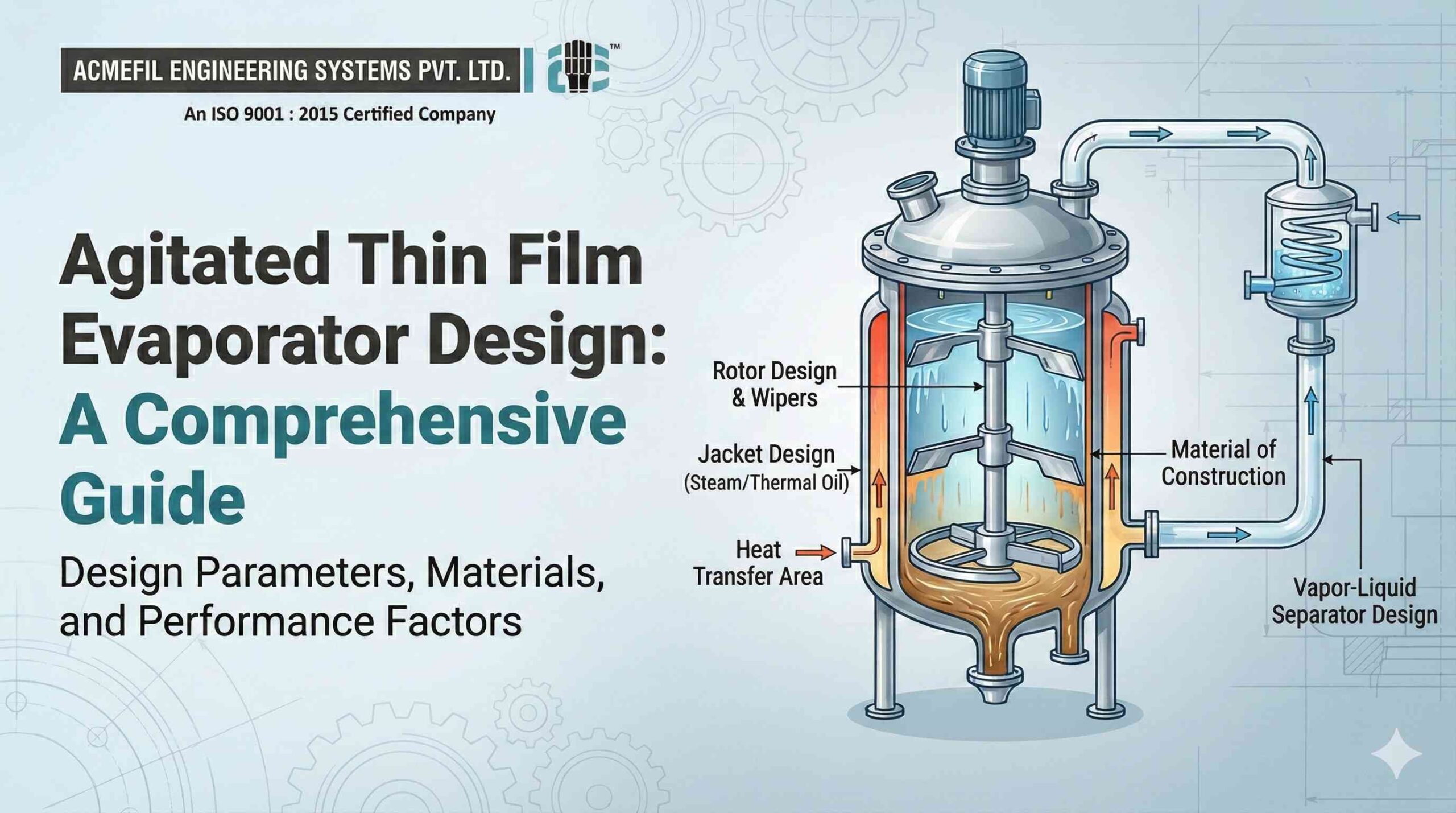
So, how does an agitated thin film evaporator work? The feed liquid enters the evaporator and flows down the inner wall of a heated cylindrical vessel. Inside, a rotor with blades rotates at high speed, continuously spreading the liquid into a turbulent, thin film across the entire heated surface.
This mechanical agitation ensures that the film is constantly renewed, which prevents fouling and guarantees that the entire liquid mass is processed evenly. As heat moves from the jacketed wall into the film, the volatile components quickly turn into vapor. This single pass operation is highly efficient.
The generated vapors rise and move to a condenser to be collected, while the concentrated, non-volatile product continues to flow down the wall and is discharged at the bottom. This mechanism is highly effective and minimizes product degradation by keeping the residence time extremely short.
Critical Design Parameters for Agitated Thin Film Evaporators
Achieving optimal performance with an agitated thin film evaporator requires careful consideration of several critical design parameters. Factors such as the desired film thickness, the agitation speed of the rotor, and the overall heat transfer coefficient are essential for success. These elements directly influence the efficiency and effectiveness of the evaporation process.
Properly balancing these parameters ensures that the equipment can handle specific feed materials without causing thermal damage or fouling. The following sections will explore these key design considerations in more detail, from the physical surfaces to the characteristics of the feed material itself.
Film Thickness, Agitation Speed, and Heat Transfer Surface
The control over film thickness is a critical aspect of agitated thin film evaporator design. A thinner film generally leads to better heat transfer and faster evaporation, but it must be appropriate for the feed material’s viscosity. The agitation speed, controlled by the rotor, directly influences this thickness and the level of turbulence in the film. Higher speeds create more turbulence, enhancing heat transfer.
The heat transfer surface itself is another key parameter. A larger and more conductive surface allows for greater energy efficiency and throughput. The goal is to achieve uniform heat distribution across the entire surface to prevent hotspots that could lead to product degradation.
Key considerations for these parameters include:
- Film Thickness: Must be optimized for liquid properties to ensure efficient heat transfer.
- Agitation Speed: Balances turbulence for heat transfer against potential mechanical stress on the product.
- Heat Transfer Surface: A larger area improves capacity and efficiency.
Considerations for Feed Characteristics and Pressure
The properties of the feed material play a significant role in the design of an agitated thin film evaporator. Viscosity, thermal sensitivity, and fouling tendency must all be taken into account to create an effective system. For highly sensitive products, the ability to operate under a high vacuum is a major advantage, as it lowers the boiling point and allows for evaporation at much lower temperatures.
Managing the pressure drop across the system is also important. A low-pressure-drop configuration allows for continuous and reliable processing, which is particularly beneficial for materials that are prone to degradation. This ensures that the process remains stable and efficient from start to finish.
Ultimately, the design must be tailored to the specific feed to ensure efficient heat transfer and protect product quality. Custom designs allow for variable operating conditions, making the unit versatile enough to handle different products effectively.
Materials of Construction and Their Selection Criteria
Choosing the right materials of construction is a critical decision in the design of an agitated thin film evaporator. The material must be compatible with the feed product to prevent contamination and corrosion, which directly impacts product quality. Common choices range from various grades of stainless steel to more specialized exotic alloys.
The selection criteria depend on the chemical properties of the process fluid, the operating temperatures, and the pressure requirements. A well-chosen material ensures not only efficient evaporation but also the longevity and reliability of the equipment. Let’s look at some common materials and how their properties affect performance.
Stainless Steel, Glass-Lined, and Exotic Alloys
When selecting materials, stainless steel is a popular choice due to its good corrosion resistance and durability. It is suitable for a wide range of applications in the food, pharmaceutical, and chemical industries. However, for highly corrosive substances, it may not be sufficient.
For processing extremely aggressive chemicals, glass-lined steel or exotic alloys like Hastelloy or titanium are often required. Glass-lined surfaces offer excellent protection against acids, while exotic alloys provide superior resistance to a broader spectrum of corrosive materials and high temperatures. This ensures the longevity of the evaporator and prevents product contamination.
The choice of material is a trade-off between cost, chemical compatibility, and thermal performance. The following table provides a simple comparison:
| Material | Key Advantage | Common Use Case |
|---|---|---|
| Stainless Steel | Good durability and general corrosion resistance | Food products, solvents, mild chemicals |
| Glass-Lined | Excellent resistance to acidic compounds | Processing of highly corrosive acids |
| Exotic Alloys | Superior resistance to corrosion and high temperatures | Aggressive chemicals, high-temp processes |
Impact of Material Choice on Efficiency and Longevity
The material choice has a direct and significant impact on the overall performance of an agitated thin film evaporator. The thermal conductivity of the material, for instance, dictates the heat transfer efficiency. Materials with higher conductivity allow for faster and more effective heating of the liquid film, which can reduce processing time and energy consumption.
Furthermore, the right material ensures the final product quality is not compromised by leaching or chemical reactions. A corrosion-resistant material prevents contamination, which is especially critical in the pharmaceutical and food processing industries where purity is paramount.
Ultimately, selecting a robust and compatible material extends the equipment’s operational life, reducing maintenance costs and downtime. While premium materials may have a higher initial cost, their contribution to efficiency, product quality, and longevity often provides a better return on investment over time.
Enhancing Efficiency and Minimizing Product Degradation
A primary goal in agitated thin film evaporator design is to maximize efficiency while protecting the product. This is achieved by minimizing product degradation, especially thermal degradation, which can occur when substances are exposed to heat for too long. The design focuses on optimizing the heat transfer surface and operating conditions for this purpose.
By ensuring rapid processing and precise control, you can achieve optimal performance without compromising the integrity of heat-sensitive materials. The following sections will cover specific strategies for mitigating common issues like fouling and for fine-tuning operating conditions.
Mitigating Fouling and Thermal Sensitivity
Fouling, the buildup of deposits on heated surfaces, is a common challenge that reduces heat transfer and efficiency. Agitated thin film evaporators inherently mitigate fouling because the rotor blades provide a self-cleaning action. This constant mechanical agitation prevents material from sticking to the wall, ensuring consistent performance.
For materials with high thermal sensitivity, the key is to minimize heat exposure. The design of an agitated thin film evaporator achieves this through rapid evaporation in a single pass. This extremely short residence time prevents the thermal stress that causes degradation.
To further reduce these risks, designers focus on:
- Constant Renewal: The rotor blades constantly refresh the liquid film, reducing the chances of localized overheating.
- High Turbulence: The turbulent flow generated by the blades promotes efficient heat transfer, quickly evaporating volatile components before the product can degrade.
Achieving Optimal Operating Conditions
To get the best results from an agitated thin film evaporator, you must establish optimal operating conditions. This involves achieving precise control over key process variables, primarily temperature, pressure, and feed rate. For sensitive products, this level of control is not just beneficial—it is essential.
Precise temperature control of the heated jacket prevents overheating, while a well-managed vacuum system allows evaporation to occur at lower temperatures. This is crucial for preserving the quality of heat-sensitive compounds. By carefully adjusting these parameters, you can fine-tune the evaporation rate to match the product’s specific requirements.
Ultimately, determining the optimal operating conditions often involves pilot testing and analysis. This allows you to balance throughput with product quality, ensuring the system runs at peak efficiency for your specific application. A customized design that allows for flexible operation is a significant advantage.
Frequently Asked Questions
What is the difference between a thin film evaporator and a wiped film evaporator?
A wiped film evaporator is a specific type of thin film evaporator. While all thin film evaporators spread liquid into a thin layer, a wiped film evaporator uses mechanical blades or “wipers” to actively distribute the liquid film on the heat transfer surface, enabling rapid evaporation and handling of viscous materials.
What are the major industrial applications of agitated thin film evaporators in India?
In various industries across India, the agitated thin film evaporator is used for food processing (concentrating juices and milk), producing fine chemicals and pharmaceuticals, and for solvent recovery from waste streams. Pilot plant facilities also allow businesses to test its effectiveness for specific applications before scaling up.
How can common challenges in design be overcome?
Common challenges like product degradation and fouling are overcome through smart design. Using an agitated thin film evaporator with a short residence time minimizes heat exposure. The mechanical agitation provides a self-cleaning effect, improving heat transfer efficiency and ensuring efficient evaporation for optimal performance.
Conclusion
In summary, the design of an Agitated Thin Film Evaporator is pivotal for ensuring operational efficiency and high-quality product output. By understanding key design parameters, selecting appropriate materials, and implementing strategies to enhance performance while minimizing product degradation, you can significantly improve the effectiveness of your evaporator system.
Whether you’re tackling challenges related to fouling or optimizing operational conditions, a well-thought-out design will lead to better results in various industrial applications. If you have any questions or need assistance with your design process, get in touch with us for expert guidance.